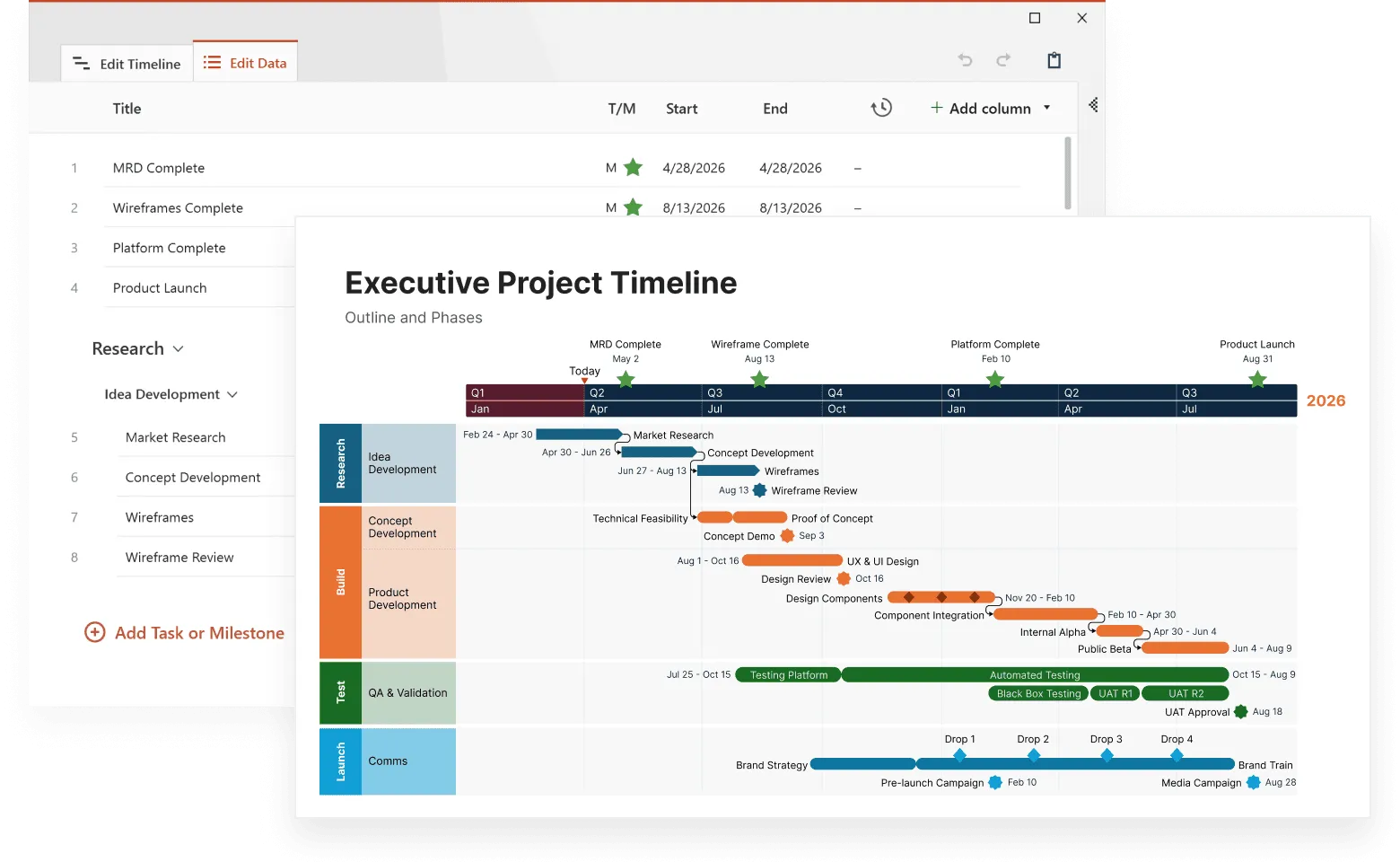
Research projects fail at predictable points. Data collection runs over schedule. Analysis phases stretch beyond deadlines. Writing takes twice as long as expected. These problems share a common root: poor temporal planning.
Timeline-based research solves this by making temporal relationships central to the research process. Instead of abstract deadlines floating in your calendar, you see how each research phase connects to the next.
You spot bottlenecks before they derail your project. You build realistic schedules that support thorough, in-depth investigation. This method transforms how researchers conduct systematic, well-structured studies.
This article explores the practical implementation of timeline-based research methods, from initial planning concepts through advanced project management strategies that support comprehensive investigation. It also aligns with principles found in expert-level timeline analysis for more in-depth exploration.
What makes timeline-based research different
Traditional research planning focuses on tasks: "complete literature review," "collect data," "write results." Timeline-based research adds temporal relationships: when tasks start, how long they take, and which ones must finish before others begin.
The difference shows up immediately in planning quality. A standard research proposal might allocate "3 months for data collection." A timeline-based approach reveals that recruitment takes 6 weeks, interviews require 8 weeks, and transcription needs another 4 weeks. The timeline exposes that 3 months won't work.
Research with timelines also highlights dependencies. You can't analyze data before collecting it. You can't write conclusions before running analysis. These obvious connections become planning tools when mapped visually.
The visual element matters more than many researchers realize. Timelines for research make abstract time concrete. You see your entire project laid out spatially, making it easier to spot problems and communicate progress to advisors or collaborators.
Understanding these conceptual foundations prepares you to build practical timelines that support your specific research needs.
Building your research project timeline
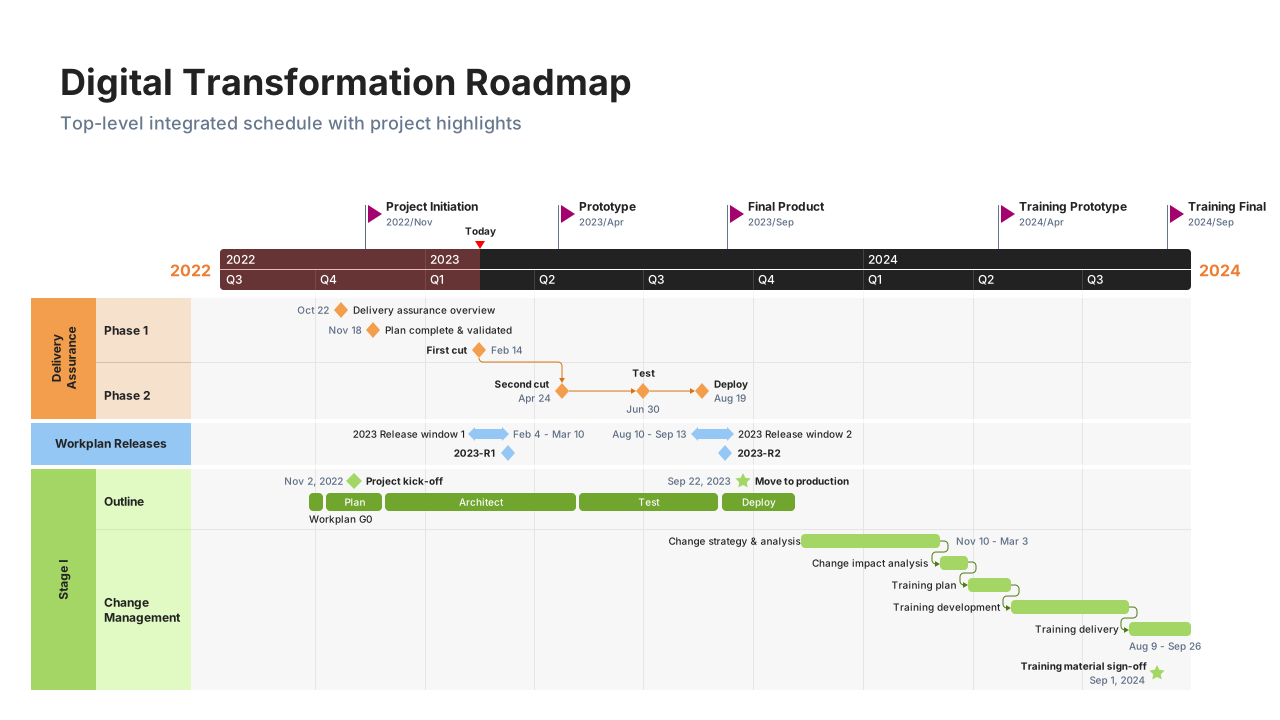
Effective timeline construction starts with strategic thinking about your research's temporal structure. Most researchers jump straight into task lists, but successful timeline building requires understanding the logical flow of your specific investigation first.
Start with your end date and work backward. If you need to defend your dissertation in December, mark that date first. Then trace backward through each required phase: final revisions, initial draft completion, data analysis, data collection, and literature review.
This reverse planning reveals timing constraints that forward planning misses. You might discover that starting data collection in September leaves insufficient time for thorough analysis. Better to learn this during planning than in panic mode later.
The essential phases to map
Every research project contains core phases that should appear on your timeline:
Literature review and theoretical grounding
This phase often runs longer than expected because each paper leads to three more. Budget 25% more time than your initial estimate.
Research design finalization
Include time for advisor feedback, IRB approval if needed, and pilot testing. Regulatory approvals alone can take 6-8 weeks.
Data collection
Break this into recruitment, actual data gathering, and initial processing. Each subphase has different time requirements and potential delays.
Analysis phase
Distinguish between exploratory analysis (getting familiar with your data) and confirmatory analysis (testing hypotheses). Most researchers underestimate exploratory time.
Writing and revision
Separate initial drafting from revision cycles. In-depth research requires multiple analytical passes and thorough documentation of findings.
Validation and verification
Include time for cross-checking results, peer consultation, and methodological review to ensure research depth and accuracy.
These phases consistently take longer than initial estimates suggest. Take a hypothetical example: a sociology researcher planning a community study estimates 4 months total. Timeline mapping reveals a different story: literature review (6 weeks), interview preparation (2 weeks), recruitment (4 weeks), interviews (8 weeks), transcription (3 weeks), analysis (8 weeks), validation (2 weeks), and writing (6 weeks). That's 39 weeks for thorough work. The timeline doesn't add tasks; it exposes the time each task actually requires.
Breaking phases into visible segments forces honest accounting. You can't hide "conduct interviews" as a vague 3-week block when you map out recruitment time, scheduling logistics, travel between locations, and technical setup for each session. The visual format makes optimistic estimates obvious.
Visualizing your research timeline
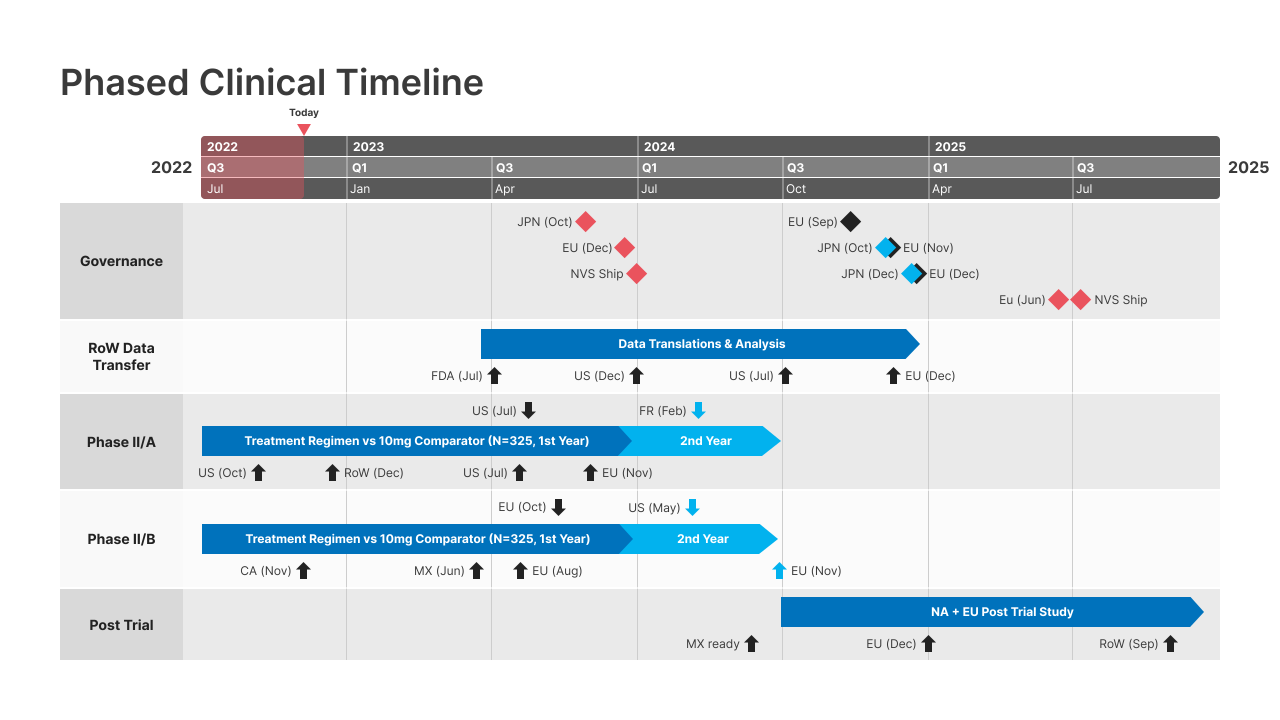
Visual timeline formats help you see your entire research project at once, revealing patterns that text-based schedules miss. The goal is to create a view that shows duration, sequence, and overlap in ways that support better decision-making.
Good timeline visualizations show multiple dimensions simultaneously: when phases occur, how long they take, which tasks can overlap, and where bottlenecks might emerge. This spatial representation makes abstract time concrete and helps you communicate progress to advisors or collaborators.
Setting up your research timeline visualization
Choose a format that matches your project complexity and personal workflow:
Simple timeline bars work well for straightforward projects with clear sequential phases. Draw bars to represent each phase, showing duration and sequence without elaborate software.
Dependency-linked timelines add connections between tasks to show which work must complete before other phases can begin. These links reveal your project's critical path: tasks that directly affect your completion date.
Multi-track timelines separate different work streams (literature review, data collection, writing) into parallel tracks, making it easier to see where phases overlap and where you'll need to focus exclusively on one area.
When building your timeline, work in actual work days rather than calendar days. Account for teaching schedules, conference travel, and the reality that research productivity doesn't follow a 9-to-5 pattern.
Mark key milestones prominently: IRB approval deadlines, conference submission dates, defense scheduling cutoffs. These fixed points anchor your flexible work phases.
Add buffer time strategically. Research phases involving external dependencies (e.g. participant recruitment, advisor feedback, equipment access) need 20-30% extra time built in. Technical problems, low response rates, and scheduling conflicts are normal, not exceptional.
Planning phases that actually work
Realistic phase planning separates successful research projects from those that struggle with constant deadline revisions. The difference lies in basing time estimates on actual work requirements rather than optimistic projections.
Research phases need realistic duration estimates based on actual work requirements, not wishful thinking. Here's how successful researchers calculate time for major phases:
Literature review planning: Count papers, not days. A thorough literature review might require reading 100+ papers, with detailed notes on 40-50 key sources. Reading and note-taking averages 2-3 papers per day for experienced researchers. New researchers need more time per paper but improve with practice.
Data collection scheduling: Start with your sample size requirement and work backward. If you need 50 interview participants, plan for 75 recruitment contacts assuming a 65% response rate. Schedule interviews with buffer time between appointments for travel, technical setup, and unexpected delays.
Analysis time allocation: Quantitative analysis moves faster than qualitative analysis, but both require iterative work. Plan for multiple analysis rounds: initial exploration, hypothesis testing, robustness checks, and interpretation. Software learning curves can add significant time for new users.
A research project timeline template should include standard phases but with customizable durations. Psychology experiments need different time allocations than historical archival research. Adjust phase lengths based on your methodology, not generic templates.
Even the most carefully planned phases will encounter obstacles, making dependency management and bottleneck identification crucial for timeline success.
Managing dependencies and bottlenecks
Research projects create intricate webs of task interdependencies that can derail timelines when misunderstood. Successful timeline management requires mapping these relationships explicitly and planning around constraint points.
Research projects create complex webs of dependencies. Some tasks must finish completely before others can start (finish-to-start relationships). Others can overlap partially (start-to-start relationships). Understanding these relationships prevents scheduling conflicts.
Common dependency patterns in research include:
- IRB approval must complete before recruitment begins;
- pilot testing should finish before full data collection starts;
- initial analysis results inform final data collection decisions;
- conference abstract deadlines often fall during data collection phases.
Timelines in research make these dependencies visible and manageable. You can see exactly when delayed approvals will impact later phases. You can plan overlap periods where preliminary results inform ongoing data collection.
Resource bottlenecks create another planning challenge. Lab equipment, advisor time, and participant pools all have limited availability. Timeline mapping helps you identify when you'll need exclusive access to shared resources and plan accordingly.
Consider scheduling flexibility during bottleneck periods. If transcription services get backlogged, having buffer time prevents delays from cascading through your entire timeline. If your advisor travels frequently during certain months, front-load meetings before those periods.
Static planning only takes you so far in research. Real projects require systematic approaches to timeline adjustment and adaptation.
Adapting timelines during execution
No research timeline survives initial contact with reality unchanged, and attempting to force rigid adherence to original plans often damages research quality. Smart timeline management builds systematic review and adjustment processes into the research workflow.
No research timeline survives contact with reality unchanged. Successful timeline-based research builds in systematic review and adjustment processes rather than treating plans as unchangeable commitments.
Schedule monthly timeline reviews during active research phases. Compare actual progress against planned progress. Identify variances and their causes. Adjust future phases based on new information about task duration or resource availability.
Common timeline adjustments
Data collection extensions happen frequently in research. Response rates run lower than expected. Technical problems delay fieldwork. Promising preliminary results suggest expanding the sample size. Build flexibility into data collection phases and have backup plans ready.
Analysis scope changes occur when initial results reveal patterns worth deeper investigation. Timeline-based planning helps you evaluate these opportunities systematically for more thorough research. Can you extend analysis time to explore emerging themes? Should you conduct additional data collection to verify preliminary findings?
Writing phase expansions are nearly universal in research projects. First drafts reveal gaps in analysis or literature coverage. Advisor feedback suggests major revisions. In-depth research often uncovers additional themes requiring thorough documentation. Plan writing phases as iterative processes that allow for comprehensive analysis presentation.
Document timeline changes and their rationales. This information improves planning for future projects and helps advisors understand why deadlines shift. Good documentation also supports funding extension requests or deadline negotiations.
Timeline adaptation works best when supported by appropriate digital tools and systematic progress tracking methods.
Integration with project management tools
Modern timeline-based research benefits significantly from digital tools that extend beyond basic calendar applications. The right software can transform timeline management from a planning exercise into an active research management system.
Modern research benefits from digital timeline tools that integrate with other project management systems. The right choice depends on your project complexity and collaboration needs, not the features list.
Simple timeline approaches:
- Spreadsheets (Excel, Google Sheets) let you create custom timelines with full control over layout and format. These work well for data-heavy projects where you're tracking multiple variables alongside your timeline.
- PowerPoint-based tools offer a middle ground between simple and complex. If you already use PowerPoint for presentations, tools like Office Timeline let you build research timelines using the same software you'll use to present your progress to committees or at conferences. Your planning document becomes your presentation without reformatting work.
- Whiteboard or paper timelines suit researchers who think better with physical materials
Collaborative timeline platforms:
- Cloud-based timeline tools sync across devices and enable real-time collaboration with advisors or team members
- Integrated research platforms combine timeline features with reference management and data organization
- Specialized project tools offer features like automatic critical path calculation and resource tracking
Look for tools that match your actual workflow:
- Version tracking if your timeline will evolve significantly during the project
- Sharing capabilities if multiple people need timeline access
- Integration options if you want timeline connections to other research tools
- Mobile access for updates during fieldwork or conferences
The tool matters less than the discipline of maintaining your timeline and using it for actual decision-making, not just documentation.
Present your research timelines clearly
Try Office Timeline for free. Create polished PowerPoint timelines that communicate your research progress, phases, and findings with clarity.
Advanced timeline strategies
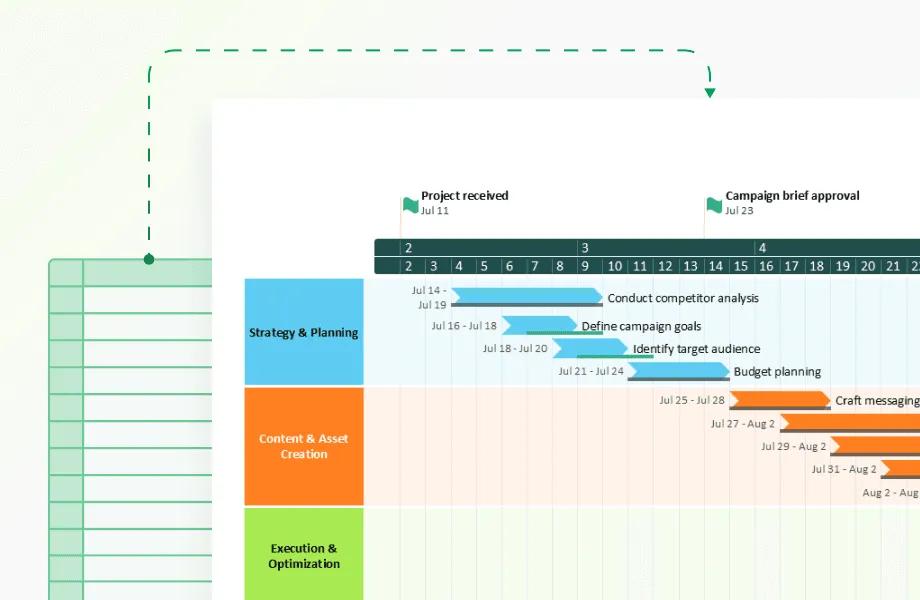
Experienced researchers develop sophisticated timeline approaches that go beyond basic task scheduling to handle complex research scenarios, multiple concurrent projects, and resource optimization challenges.
Experienced researchers develop sophisticated timeline strategies that go beyond basic task scheduling. These advanced approaches handle complex research scenarios more effectively.
Parallel processing opportunities allow multiple phases to run simultaneously when dependencies permit. Literature review can continue during data collection for iterative projects. Initial analysis can begin before data collection completes if early results are available.
Contingency planning builds alternative pathways into timelines before problems occur. If primary data sources become unavailable, what secondary sources could substitute? If analysis reveals unexpected patterns, what additional investigation might be needed?
Resource optimization matches timeline phases to resource availability patterns. Schedule intensive advisor consultation during periods when they're available. Plan conference travel during natural project breaks. Align data collection with participant availability cycles.
Integration across projects helps researchers managing multiple concurrent studies. Timeline visualization reveals scheduling conflicts between projects and opportunities for resource sharing. Conference presentation deadlines can be aligned across projects for efficient preparation.
Conclusion
Timeline-based research transforms project management into a systematic approach for conducting thorough, comprehensive studies. By using timelines to structure your research process, you create conditions that support in-depth investigation while maintaining realistic schedules and clear progress milestones.
The key insight is that conducting truly in-depth research requires temporal structure. Deep literature analysis takes time to develop. Thorough data collection cannot be rushed. Comprehensive analysis requires multiple iterative passes. Making these temporal requirements explicit through timeline planning enables the kind of methodical, thorough investigation that produces meaningful research contributions.
Start with simple timeline mapping for your next research project. Identify major phases, estimate realistic durations, and map dependencies between tasks. Even a basic visual timeline will reveal planning gaps that text lists miss.
The investment in timeline planning pays dividends throughout your research career. Better initial planning reduces stress during execution. Visual progress tracking maintains motivation during long projects.
Systematic timeline review improves estimation skills for future studies. Most importantly, clear timelines let you focus on the research itself rather than constantly recalculating when things will be done.
Frequently asked questions
Researchers often encounter challenges when implementing timeline-based approaches to their studies. These questions reflect concerns from academic and professional research communities about practical timeline management.
Plan for 25-50% longer than your initial estimate. Research consistently takes more time than expected due to iterative processes, external dependencies, and the nature of discovery itself. First-time researchers should lean toward the higher end of this range.
Start simple with tools you already know. Excel or Google Sheets work well for basic timelines and cost nothing. As your needs grow, consider:
- Gantt chart software like Microsoft Project or TeamGantt for complex dependencies
- Research-specific tools like Notion or Airtable that combine timeline features with note-taking
- Free alternatives like OpenProject or GanttProject for budget-conscious researchers
The best tool is the one you'll actually use consistently.
Yes, absolutely. Writing often takes 30-40% of total project time and should be integrated throughout your timeline, not treated as an afterthought. Plan for multiple writing phases: early drafts during data collection, analysis documentation during the analysis phase, and final writing with multiple revision cycles.
Focus on your critical path first. Identify which delayed tasks actually impact your final deadline versus those with built-in flexibility. Most research projects can absorb 2-3 week delays in non-critical phases without affecting completion dates.
When critical delays occur:
- assess what caused the delay and whether it's likely to recur;
- look for tasks that can be compressed or done in parallel;
- consider scope adjustments before extending deadlines;
- communicate early with advisors or stakeholders about potential impacts.
Break phases down to 1-2 week chunks for active work periods. Daily scheduling becomes overwhelming and weekly scheduling provides insufficient tracking granularity. Include specific deliverables for each chunk so you can measure progress objectively rather than relying on subjective completion estimates.
No. Methodology drives timeline structure. Quantitative studies need different phase allocations than qualitative research. Historical archival work follows different patterns than experimental studies. Create methodology-specific templates based on your discipline, then customize for individual project requirements.